From an online conversation hosted by the Bureau of General Services–Queer Division, 22 March 2023
Joe Scheip: Lev Tolstoy, Leo Tolstoy, Count Tolstoy, or any other of the many names and titles of Lev Nikolaevich Tolstoy, was as diverse in being as in his many names. Complex and sometimes hypocritical, Lev was not just known in his time as a great author and poet, but also as a visionary and a revolutionary in ethics and politics: a believer in Christian anarchism. He challenged power, in all its forms.
Lev Tolstoy lived from 1828 to 1910. He was contemporaneous in his own country with Russian Tsars Alexander II and Alexander III, and later in life, with Nicholas II. He was born into some wealth and rank. Russia at the time was a quasi-feudal capitalist society, with deep disparity in social classes, the scourge of imperial rule, and the horrors of serfdom.
Tolstoy’s life has many epochs: first, a young adulthood that included eventful and traumatizing experiences in the military; then, Tolstoy the great author, writing best sellers even in his own time. Also, Tolstoy the social experimenter: using his homebase Yasnaya Polyana as a springboard for radical experimentation in education, eating, and social ranking. This was a place where holy fools, mystics, seekers and the like would come and stay, to attempt to create new worlds—much to his wife Sofia Tolstaya’s chagrin.
And we shouldn’t leave out Sofia here—as Tolstoy did, deciding to meditate amongst the honeybees during the pregnancy of their first child. Sofia should be credited, amongst many other things, with the countless hours spent copywriting and editing Tolstoy’s work—invisible labor, much like the labor of mothering their 13 children.
And Tolstoy’s hypocrisies and contradictions only continue from there. Yet he seemed to be fully aware. He writes in The Kingdom of God is Within You:
“We are all brothers—yet every morning a brother or sister must empty the bedroom slops for me. We are all brothers, but every morning I must have a cigar, a sweetmeat, an ice, and such things, which my brothers and sisters have been wasting their health in manufacturing, and I enjoy these things and demand them… We are all brothers, but I take a stipend for preaching a false Christian religion, which I do not myself belief in, and which only serves to hinder men from understanding true Christianity… The whole life of the upper classes is a constant inconsistency. The more delicate a man’s conscience is, the more painful this contradiction is to him.”
And while there are many things to examine in Lev’s life, Javier’s project—Queer Tolstoy: A Psychobiography (2023)—focuses on uncovering the both overt and subliminal queerness in Tolstoy’s life and work, and to link his erotic dissidence with his anarchist politics.
Was Tolstoy queer? In the sense of his lack of integration with mainstream society, the answer can only be a resounding yes. Was Tolstoy homosexual? The answer is more complicated. There are, however, many things that point to Tolstoy’s homosexual and homosocial gravitations, including his own words in his diary and Sofia’s later words, asking forgiveness for being the barrier to his encounters with other men.
Along with Javier’s historical, psychological, and social commentary, the book includes a queer reading of War and Peace, which unveils homosexual and double entendres galore.
On queer and queerness: what drove your interest in studying this under-researched area of Tolstoy’s life?
Javier Sethness: My mother María Castro, who is an art historian, would often tell me in childhood that art is usually autobiographical. The filmmaker Federico Fellini agreed. Take Ernest Hemingway or George Orwell’s volunteering in the Spanish Civil War, which yielded such classic books as For Whom the Bell Tolls and Homage to Catalonia. Or consider Steven Spielberg’s films—Schindler’s List, Saving Private Ryan—and Octavia Butler’s novels, The Parable of the Sower and Parable of the Talents. In much the same way, Lev Nikolaevich Tolstoy’s art is highly autobiographical. The count drew from personal and family experiences to create most of his best-known artworks, from the “Sevastopol Sketches” to The Cossacks, War and Peace, Anna Karenina, “The Death of Ivan Ilych,” and Hadji Murat, among others. So when I write that queerness permeates Tolstoyan art, I am also suggesting that this artistic queerness represents autobiographical disclosure, as I engage in a kind of self-analysis—to see how queerness influences my own life, along with Tolstoy’s biography and artworks, plus the human condition.
Initially, I had simply planned to analyze Tolstoy’s artistic critique of war and militarism, which is realistic, humanistic, and anti-authoritarian, while considering some of the implications for left-wing internationalism today, especially in light of the resurgence of fascism and neo-Stalinism. But I was struck in my readings by the palpable homoeroticism that pervades Tolstoyan art, so I refocused the project into a psychoanalytical examination of the links between the artist’s erotic dissidence and his anarchist politics: in other words, of his queer anarchism.
Besides Tolstoy’s writings and biographies, this journey led me to research, among others, Bruce Perry’s findings about Malcolm X’s youthful gay relationships, Edward Carpenter’s progressive studies of homosexuality, Russian and Ukrainian LGBTQ history, the lesbian attractions that Tolstoy’s wife Sofia Andreevna Tolstaya includes in her own art, the lesbian and bisexual women’s participation in the Easter Rising of 1916, comrade-love in the Paris Commune and the Russian Revolution, and what the late Chris Chitty describes as the “ancient association of same-sex eroticism with the hatred of tyranny,” which dates back at least to classical Greece.
With time, I noticed that intimate emotional bonds with other men were constants in Tolstoy’s “psychogeography,” both in terms of his life and his imagination, as expressed artistically. Besides including a brief review, in Perry’s style, of the subject’s homoerotic life, Queer Tolstoy features Freudian, Frommian, and Marcusean lenses, in the sense that I apply Sigmund Freud’s concepts of infantile sexuality, universal bisexuality, and polymorphous perversity; Erich Fromm’s critique of necrophilia and authoritarianism and simultaneous promotion of meaning and freedom; and Herbert Marcuse’s championing of Eros, or the life drive, to interpret Tolstoy’s life and art within its political and historical context.
Of these concepts, let me briefly explain Freud’s ideas about universal bisexuality and polymorphous perversity. Freud, the father of psychoanalysis, hypothesized that we are all bisexual, in the sense of both integrating male and female elements, and having pansexual attractions. (By the way, Charles Darwin would appear to agree with the former point, considering his view that “every man & woman is hermaphrodite.”) In Three Essays on the Theory of Sexuality (1905), Freud proposes that human beings are sexual from birth, and that our libido (or sex-drive) expresses itself in “polymorphous-perverse” ways. I for one believe that our attachments and attractions manifest in wide-ranging, kaleidoscopic, and, yes, polymorphous fashion. So, while Freud and many of his followers were not necessarily friendly with the LGBTQ community—two of the notable exceptions here being Marcuse and the anarchist psychiatrist Otto Gross—I believe that some Freudian concepts can still be useful to us.
Moreover, by writing Queer Tolstoy, I sought to resist the heterosexist presumption that LGBTQ people and experience should remain invisible, together with the Russian State’s aggressive homonegativity. This is despite its official boosting and opportunistic use of some of Tolstoy’s lyricism, regardless of his excommunication by Russian Orthodox Church. President Vladimir Putin’s queerphobia is crystallized in the criminalization of “non-traditional” sexual relations and gender presentations—previously limited to minors, but now extended to the entire population. The Russian LGBT Network has been officially branded a “foreign agent.” This is not to mention genocidal crimes committed against the LGBTQ community in Chechnya, under Putin’s satrap Ramzan Kadyrov.
I struggle with the word queer, with its history as a pejorative, but preserving the word queer seems crucial in counter balancing the weaponization of terms like traditional family values, and other, related terms that used to suppress sensuality, art, love, and new ways of being. Tell me about your reaction to the term queer? Why do you think it is fitting word to describe Tolstoy?
I hear that concern, although I suspect that there might be a generational gap here. A recent letter to the editors of the Guardian, apparently written by a 55-year old gay man, requested that the paper not use the “Q-word” because he found it “insulting and derogatory.” By contrast, the queer identity resonates more among younger people from the LGBTQ community, of which I am a part.
In the book, I use “queer” to refer both to “sexual deviance and freely chosen LGBTQ+ desire and experience,” as well as the intersection of LGBT experience and political radicalism. Going back to Freud and Marcuse, I believe “queerness” to be a synonym for “polymorphous perversity” and Eros. Along these lines, I emphasize the “lesbian continuum” hypothesized by Adrienne Rich, together with Freud’s ideas about a parallel gay continuum tying together the homosocial, homophilic, and homosexual worlds, while remaining critical of the toxic masculinity often exhibited by gay, bisexual, and straight men—Tolstoy not excluded!
As you rightly pointed out in your introductory comments, Joe, Tolstoy was not homosexual per se. By no means do I mean to erase his long marriage with Sofia Andreevna, who gave birth to thirteen of their children, much less his sexual relationships with other women. If I had to classify the count, I would say he was bisexual (in keeping, indeed, with Freudian theory). With this in mind, plus considering his dikost—a Russian word which means “daring,” “wildness,” or “iconoclasm”—I thought the title Queer Tolstoy was fitting.
In the introduction to my book, which is now available open-access, I briefly review nineteen same-sex relationships that I could glean from Tolstoy’s homoerotic biography. These include bonds with the Chechen Sado Miserbiyev, the revolutionary Russian youth Vasily Alexeev, the Ukrainian Jewish peasant Itzhak Feinermann, the Russo-Ukrainian composer Peter Tchaikovsky, the Indian independence leader Mohandas K. Gandhi, and the self-aggrandizing Tolstoyan proprietor Vladimir Chertkov, among others. Lev Nikolaevich himself admits to eight other gay attachments early on in his diaries. Considering the artist’s hyper-sexual impulses, these likely only represent the proverbial “tip of the iceberg” for Tolstoy’s same-sex experiences.
Nina Nikitina, senior researcher at Yasnaya Polyana, writes that Tolstoy “read love signs all the time and was in their power.” He certainly sought love as mutual recognition and connection, as is emphasized by humanistic psychoanalysts like Jessica Benjamin. Such themes feature especially in War and Peace, a canvas on which Tolstoy’s alter egos discover spontaneous same-sex attractions on the battlefields and behind the front lines as comrades collectively resisting Emperor Napoleon Bonaparte’s onslaught. These include platonic, deeply felt lesbian and gay bonds between Princess Marya Bolkonskaya and Julie Karagina on the one hand, and between Prince Andrei Bolkonsky and Captain Tushin on the other. Plus, as during World War I, soldiers will fraternize homoerotically and agree to cease-fires across the lines of control.
Tolstoy is known for bringing the realities of war and imperialism home to Russians. He was critical of the idea of the strong man, the leader who will bring his people glory. This seems to be very fitting, given the current tragedy of Ukraine and the despotism of Putin. What would Tolstoy say today about the current situation?
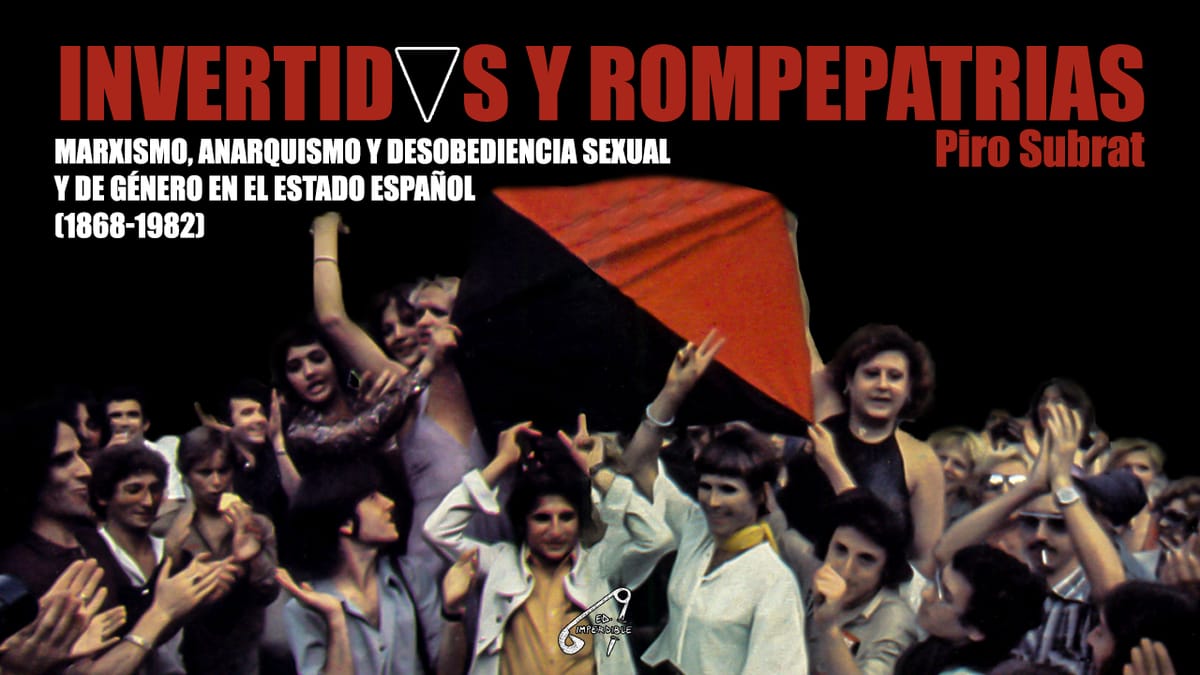
As Piro Subrat explains in Invertidos y Rompepatrias (2019), a history of the Spanish LGBTQ community, Tolstoy supported the mission of the Scientific-Humanitarian Committee, which was founded by the German physician and sexologist Magnus Hirschfeld in 1897. This committee, the first LGBT rights organization in history, sought to repeal Paragraph 175 of the German criminal code, which was used to criminalize male homosexuality from 1871 to 1994. In this light, Tolstoy would likely have been horrified by Putin’s war on the queer community, which has resonated with Republicans in the US.
Both of these conservative-authoritarian power-groups are dehumanizing and inciting violence against us, with the Daily Wire commentator Michael Knowles even calling at this year’s CPAC (Conservative Political Action Conference) for trans* people to be “eradicated from public life entirely.” The state of Tennessee has now criminalized drag. Meanwhile, Patriarch Kirill, head of the Russian Orthodox Church, has sought to cast Russia’s invasion of Ukraine as retribution for the LGBTQ pride marches the country has hosted—just as Putin’s forces have wielded wanton sexual violence against the LGBT+ community in occupied Ukraine. I believe that Lev Nikolaevich would have spoken out against such queerphobic hatred and ultra-violence.
Although some of his descendants, like the “United Russia” representative Pëtr Tolstoy or Putin’s cultural adviser Vladimir Tolstoy are undoubtedly reactionaries, Lev Nikolaevich, were he alive today, would most likely be condemning Russia’s war on Ukraine and standing in solidarity with Ukrainian defenders and Russian protesters. Concretely, I imagine that he would also be involved with journalistic efforts to uncover the brutal realities of the war, in defiance of State media narratives, official censorship, and Putin’s megalomania, and that he would support war resistance, such as the sabotage taken up by the Combat Organization of Anarcho-Communists (BOAK), plus conscientious objection and desertion from the battlefield. He might have highlighted the disproportionate utilization of soldiers from Russia’s ethnic and indigenous communities as cannon fodder, or circulated news about all the land mines planted by the invaders in Ukraine’s agricultural fields. Like his great grand-daughter Maria Albertini, he would likely be involved in directly supporting Ukrainian refugees.
You may have seen that Putin’s regime has cynically used Tolstoy’s face to adorn a high fence set up around the Mariupol Drama Theatre in occupied Ukraine. This was the site of a horrific massacre perpetrated last March by the invading Russians. Up to six hundred Ukrainian civilians were killed as they took shelter there from the ruthless assault. The same month, in Mariupol, a Russian airstrike destroyed the Arkhip Kuindzhi Art Museum, which had hosted paintings by this renowned artist, born in the same city. (His “Rainbow” painting is included in my book.) Needless to say, Tolstoy, who inspired the Revolution so despised by Putin, and who remains excommunicated by the Russian Orthodox Church, would not conceivably have consented to such use of his image.
Considering the fate of Alexei Navalny, the main leader of the anti-Putin opposition, whose views are much more conservative than Tolstoy’s, and who is currently a political prisoner in a maximum-security facility outside Moscow (as Daniel Roher, the director of the Oscar-winning documentary about his poisoning, reminds us), Tolstoy probably would have been imprisoned or assassinated under Putin’s regime—as the critic Boris Nemstov and journalist Anna Politkovskaya, among many others, have been. Indeed, as I discuss in the book, Tolstoy very nearly was imprisoned and executed when the translation of an openly anarchist essay of his appeared in the English press in 1891. It was really only thanks to the intervention of his high-ranking cousin, courtier Alexandrine Tolstaya, that Lev Nikolaevich survived this incident.
It is crucial that Ukraine win this war against Russia, and liberate its occupied territories. As the Russian Socialist Movement points out, “Russian history is replete with examples of military setbacks abroad that have led to major change at home.” Tsar Nicholas I’s death from stress and/or suicide in 1855 as his Empire suffered setbacks in the Crimean War brought Alexander II’s formal abolition of serfdom closer, just as it opened up new possibilities for radical struggle from below. During World War I, Russian casualties, poor morale, and mass-desertion (blamed, in part, on Tolstoy’s ideas) contributed to the coming of the Revolution. Rather than continue to blackmail the world with nuclear weapons and mobilize lies about “Ukrainian Nazis” to rationalize his atrocities, Putin must be thoroughly defeated on the battlefield, so that his regime falls, too.
In his life and his works, Tolstoy points to history not being steered by leaders or great men, but by the people. His critical view on the idealization of the “strong man,” the leader who will bring his people glory, again has parallels to what we are witnessing today with Putin in Russia and the U.S. In contrast, he put his faith in “the People.”
Yes, that’s right. As he describes in A Confession (1882), it was the common people’s faith that saved him from taking his life during the spiritual crisis he experienced at the end of the 1870’s, after finishing Anna Karenina. When he was younger, as well, peasant women saved him from drowning in the Volga River, while his wet nurse was a serf woman named Avdotia Ziabreva. In reality, just before he passed away, Tolstoy was asking about the peasants.
In the book, I describe Tolstoy as a champion of anarcho-Populism, or the anarchist current of Narodnichestvo (also translated as Narodism). This was a revolutionary anti-Tsarist movement of the nineteenth and twentieth centuries that envisioned an agrarian-socialist future for Russia. Besides Tolstoy, its main proponents were Herzen, Bakunin, Chernyshevsky, and Lavrov. (This was before Plekhanov and Lenin introduced Marxism to the Empire.) Some forerunners of anarcho-Populism included “men of 1812” like Tolstoy’s distant cousin, General Sergei Volkonsky. These “men of 1812” were veteran officers from the 1812 war against Napoleon. Known as a “peasant prince,” Volkonsky was exiled with his wife Marya to Siberian exile for three decades for spearheading the Decembrist conspiracy to overthrow Tsarism in 1825. This man, whose life was spared (in contrast to other Decembrist leaders) only owing to his family’s great prestige—specifically, his mother’s intercession—served as the model on which Tolstoy based Prince Andrei Bolkonsky in War and Peace. (As a side note, the support of Bakunin’s mother was crucial in convincing Tsar Alexander II to commute the rebel’s prison term to Siberian exile, thus facilitating his escape from the Empire.)
In contrast to direction by “great men,” like the Romanov Tsars, Bonaparte, Trump, or Putin, Tolstoy proposes that history is built from below through the collective action of the People. In War and Peace, he presents several examples of collective resistance to Napoleon’s invasion of Russia which have present-day echoes. These include the need to support Ukraine’s legitimate self-defense against the Russian onslaught; the imperative of unionizing and socializing the global economy; and the necessity of a worldwide transition to wind, water, and solar energy (WWS).
It’s interesting, reconciling Tolstoy’s heroization of the collective resistance of the Russian people to expel Napoleon with his transition to advocate of non resistance. And not just any advocate, but an influencer of peaceful resistance of historic proportions…
You’re right. It is quite the contradiction. Tolstoy espoused pacifism in the wake of his ‘conversion’ to rationalist Christianity after suffering a crisis of depression and suicidality in the 1870’s—mirroring the decline of the radical anti-Tsarist movement under Alexander II. Non-resistance follows from Jesus’ command, made during the Sermon on the Mount, to “resist not the evildoer” (Matthew 5:39). While this directive appears to demand servility and passivity, and thus reproduce abusive dynamics, the Unitarian Universalist Adin Ballou interpreted it as meaning that “we are not to resist evil with evil,” but “[e]vil is to be resisted by all just means.” Gandhi, who corresponded with Tolstoy at the end of his life about this very concept (and founded the Tolstoy Farm in South Africa in 1910), likewise promoted civil disobedience as non-violent resistance to abuse, or Satyagraha, in the struggle against British imperialism in India. In turn, Martin Luther King, Jr., preached Gandhian and Tolstoyan non-cooperation in his dream for the non-violent, anti-racist transformation of U.S. society.
Still, the theory of non-resistance has clear limits. If one takes the injunction not to “resist the evildoer” literally, then the Ukrainians would have to surrender to Putin; the Communards of Paris, the Kronstadt sailors, the Jews of the Warsaw Ghetto, and Haitians, Syrians, and Palestinians should not have risen up; and workers and minorities should not complain or organize—but simply grin and bear everything. This is a self-defeating current in Tolstoy’s thought that amounts to a “betrayal of the cause of the oppressed,” in the words of the Italian anarchist Errico Malatesta, and “an enclosure of his own position,” as my comrade Shon Meckfessel writes. Indeed, this tension may speak to Tolstoy’s war trauma and fragmented sense of identity. After all, throughout his life, he resisted abuse, and admired and enshrined resistance to authority.
As you put aptly in your book, “Alienation is universal under capitalism.” I’m all too familiar with the feelings of alienation, and while Tolstoy wasn’t under modern capitalism’s yoke per se, he lived under a system of extreme disparity and social restriction. In reaction to this, his life appeared to be a journey of seeking a better way, a kingdom of God here on earth. As such, he turned to an interesting form of spiritualism. Could you talk more about that?
Yes, of course. While fighting at the siege of Sevastopol during the Crimean War, Tolstoy experienced an epiphany just after the death of Tsar Nicholas. He then proposed the “stupendous idea” of founding a new religion based on the actual teachings of Jesus the Nazarene, rather than established church dogmas or mysticism. This dream-state expressed the artist’s therapeutic desire to contest the death-dealing authority of Church and State by promoting union. It is reproduced in War and Peace during Prince Andrei’s trance, as he lies injured at the battle of Austerlitz, and affirms the utopian desire for peace, while experiencing a psychedelic “queerpiphany.” Tolstoy’s passionate engagement with Christianity is based in the evangelical message of the Gospels, not church rituals. His was a non-orthodox Christianity: Tolstoy’s “new translation” of the Gospels (1881) ends with Jesus’ crucifixion at Golgotha and excludes most mentions of miracles, including above all the resurrection.
Although Tolstoy became more openly didactic after his spiritual crisis, his Christian anarchism can also be gleaned from his earlier writings, including War and Peace. In this work, Pierre Bezukhov, another Tolstoyan alter ego, becomes a Freemason after separating from his first wife, Hélène. By introducing this radical homosocial association, which anticipates Pierre’s joining the Decembrists at the book’s end, Tolstoy presents an interpretation of Christianity “freed from the bonds of State and church, a teaching of equality, brotherhood, and love.” Along these lines, the anarcho-communist Peter Kropotkin admired Freemasonry for advancing self-organization in Russia, while the Tsars feared precisely the freethinking and autonomy it stimulated.
In middle age, the count took up vegetarianism, renounced hunting, adopted strict pacifism, and condemned the libido—regardless of how unhappy this latter position would leave his wife Sofia Andreevna. Such ascetic changes may have resulted from Tolstoy’s encounters with death-anxiety as he aged; an intensification of underlying bipolar depression; a queer dissatisfaction with straight conventions; and/or the artist’s life-long attempt to observe his principles and so prefigure the Kingdom of God. While he did not succeed in meeting his goal of living simply and peacefully in an egalitarian community, much less of redistributing his lands and estates, these contradictions drove the tragic flight of this “proletarian lord” in October 1910.
You delve deeply into philosophy and psychology in Queer Tolstoy, as you have done in your other works, including in your previous work on Marcuse, Eros and Revolution. What gravitates you to these fields? And further, how can we connect Tolstoy’s philosophy to our own lives?
Like Lev Nikolaevich, I am a seeker: a Resident and Stranger. In my writings, I challenge the divisions that are often drawn between mind and body, idealism and materialism, and psychiatry and medicine. As Marcuse, Gross, and Tolstoy knew, these realms are actually connected.
I’m especially fascinated by Tolstoy as a “forerunner” of the Russian (and Mexican) Revolutions, the tragic experience of his followers in the Soviet Union (which confirms the counter-revolutionary nature of Leninism and Stalinism), and the ongoing relevance of Tolstoyan radicalism. I’m intrigued by the artist’s critiques of violence, hierarchy, and despotism; his work in popular education and famine relief; his engagements with Islam, Buddhism, and Daoism; his support for erotic, moral, and political self-determination; his existential emphasis on creating meaning in the face of death; his queerness (of course); and his inspiration of plant-based, pacifist communes guided by ideals of “peaceful revolution” and “universal brotherhood.”
Still, we must learn from Tolstoy’s mistakes: above all, his gross sexism, which is consistent with the toxic masculinity that is prevalent today in much of the gay community and beyond; his ambivalence sometimes expressed, particularly in War and Peace, about White-Russian chauvinism; his masochistic theory of non-resistance, which advises against resisting abuse; and, ironically, his gay timidity—notwithstanding the constraints imposed by Tsarism. The fates of Prince Andrei and Captain Tushin, and Princess Marya and Julie Karagina, reflect his ambivalence over the libido and queer desire. As Freud knew, this shyness only perpetuated his unhappiness!
Politically speaking, there are a myriad of ways that we can connect Tolstoy’s philosophy to the present day. In contrast to Pushkin and Lermontov’s poetry, Tolstoy’s writings about Transcaucasia—including “The Raid,” The Cossacks, Hadji Murat—are generally humanistic, internationalist, and critical of Tsarist regional expansionism. They can be read to highlight the historical continuum of White-Russian violence, which has taken the lives of hundreds of thousands of Chechens since the collapse of the Soviet Union over 30 years ago. In this vein, we must never forget that Tsarist imperialism annihilated the vast majority of the Circassian people, otherwise known as Adyghes, in the Caucasus in the eighteenth and nineteenth centuries. In this light, we should channel Tolstoyan anti-war realism (but not dogmatic pacifism) to reject the left-right alliance that is converging against Ukraine. Trump, DeSantis, Fox News hosts, and MAGA extremists in the House all proclaim the fascist slogan “America First” in calling for Ukraine to be cut off, while neo-Stalinists and pseudo-anti-imperialists demand that Ukraine surrender to Russia.
History shows that Franco’s victory in the Spanish Civil War—which was achieved with the support of Hitler and Mussolini, Stalin’s betrayals, and the non-intervention policy of the Western democracies—set the stage for World War II. In much the same way, Putin’s “anti-humanitarian intervention” in 2015 to prop up Bashar al-Assad’s dictatorship from being swept away by the Syrian Revolution prepared the ground for the ongoing full-scale attack on Ukraine. Given the pressing need to stop Putin, I welcome his recent indictment by the International Criminal Court.
We chose the title “seeking the anarchism of love” as the title of our discussion, so I thought it fitting to pull this quote from War and Peace:
“Love hinders death. Love is life. All, everything that I understand. I understand only because I love. Everything is, everything exists, only because I love. Everything is united by it alone. Love is God, and to die means that I, a particle of love, shall return to the general and eternal source.”
But what about the anarchism of love? is love integral to anarchism? And is true love anarchic?
Certainly, love, connection, and attachment are integral to anarchism, understood as anarcho-syndicalism, anarcho-communism, anarcha-feminism, and Christian anarchism.
Throughout his life, beyond infancy, Lev Nikolaevich missed his mother, Princess Marya Volkonskaya, who passed away at the young age of thirty-nine. Still, he often yearned for her love, even as an old man, and it is evident how much her pro-social personality marked him. One of War and Peace’s main protagonists is based on her, and what is more, the real-life Marya’s unfinished family novel, Russian Pamela, deeply influenced the themes and characters Tolstoy features in his own prose poem. Akin to the British feminist Mary Wollstonecraft, Princess Marya—who received a classical education at Yasnaya Polyana, thanks to her progressive father—was an “unlikely revolutionary.”
In turn, like Leonardo da Vinci, whose mother may have been, according to new research, a trafficked Circassian, Tolstoy identified with his mother and aunts, together with traditionally “feminine” virtues like care and compassion. Plus, as a cadet in the Caucasus, Tolstoy was intensely attracted to the “God of Love and Reason” that he discovered among the natural beauty there, and the social and sexual freedom practiced by his Cossack hosts, at least within their in-group. He was certainly repelled by Cossack violence against the Muslim Chechens. Your apt quote from War and Peace, which appears just after Prince Andrei’s death due to injuries sustained at the battle of Borodino, frames love in Marcusean terms as Eros, eternally struggling against archaic forces and Thanatos (or the death drive).
Many times in War and Peace, we encounter scenes that recall bell hooks’ concept of the anarchism of love, whereby arousal and attachment contest hierarchy and convention, challenge abuse, and tear down walls. Hence, the spontaneous comrade-love that develops on the battlefield between Prince Andrei and Tushin; Pierre’s homoerotic bonds with his Freemason and peasant mentors and serf-soldiers at Borodino; plus Natasha Rostova’s prayer for “one community, without distinction of class, without enmity, united by brotherly love.” Likewise, if we think of Jessica Benjamin’s idea of love as mutual recognition, we can read War and Peace as an allegorical journey of transition and transformation—from the despotism and violence encoded by Tsarism and Bonapartism (reminiscent of biblical captivity in Egypt and Babylon), to a better future characterized by equality, peace, and freedom (that is to say, the Kingdom of God).
Such insurgent passions reverberated in the Russian Revolution, especially in the nearly 100 Tolstoyan communes and cooperatives founded soon after the fall of the Romanov dynasty, as well as in the Mexican Revolution, with the rebels Praxedis Guerrero, Ricardo Flores Magón, and General Emiliano Zapata looking to the Russian anarchist sage for inspiration.
Lastly, in the 1970’s, hippies from the Soviet counterculture rediscovered Tolstoy as a spiritual guide for their anti-authoritarian journeys and pilgrimages, experiments in pacifism and free love, and protests against the Soviet regime.
That’s all for now. Thanks for reading, and please don’t forget to donate what you can to Solidarity Collectives.
Links
Queer Tolstoy
Open-access introduction (chapter 2)
YouTube recording
Leo Tolstoy archive (English translations)
Bureau of General Services–Queer Division
Michael Denner, “The ‘proletarian lord’: Leo Tolstoy’s image during the Russian revolutionary period” (2010). doi: 10.1017/CBO9780511676246.012
Irina Gordeeva, “Tolstoyism in the Late-Socialist Cultural Underground: Soviet Youth in Search of Religion, Individual Autonomy and Nonviolence in the 1970s–1980s” (2017)
—, “The Evolution of Tolstoyan Pacifism in the Russian Empire and the Soviet Union, 1900–1937” (2018)
Michael Kazin, “Reject the Left-Right Alliance Against Ukraine” (2023)
Mark Mola, “The Circassian Genocide” (2016).


 Notes toward an International Libertarian Eco-Socialism